
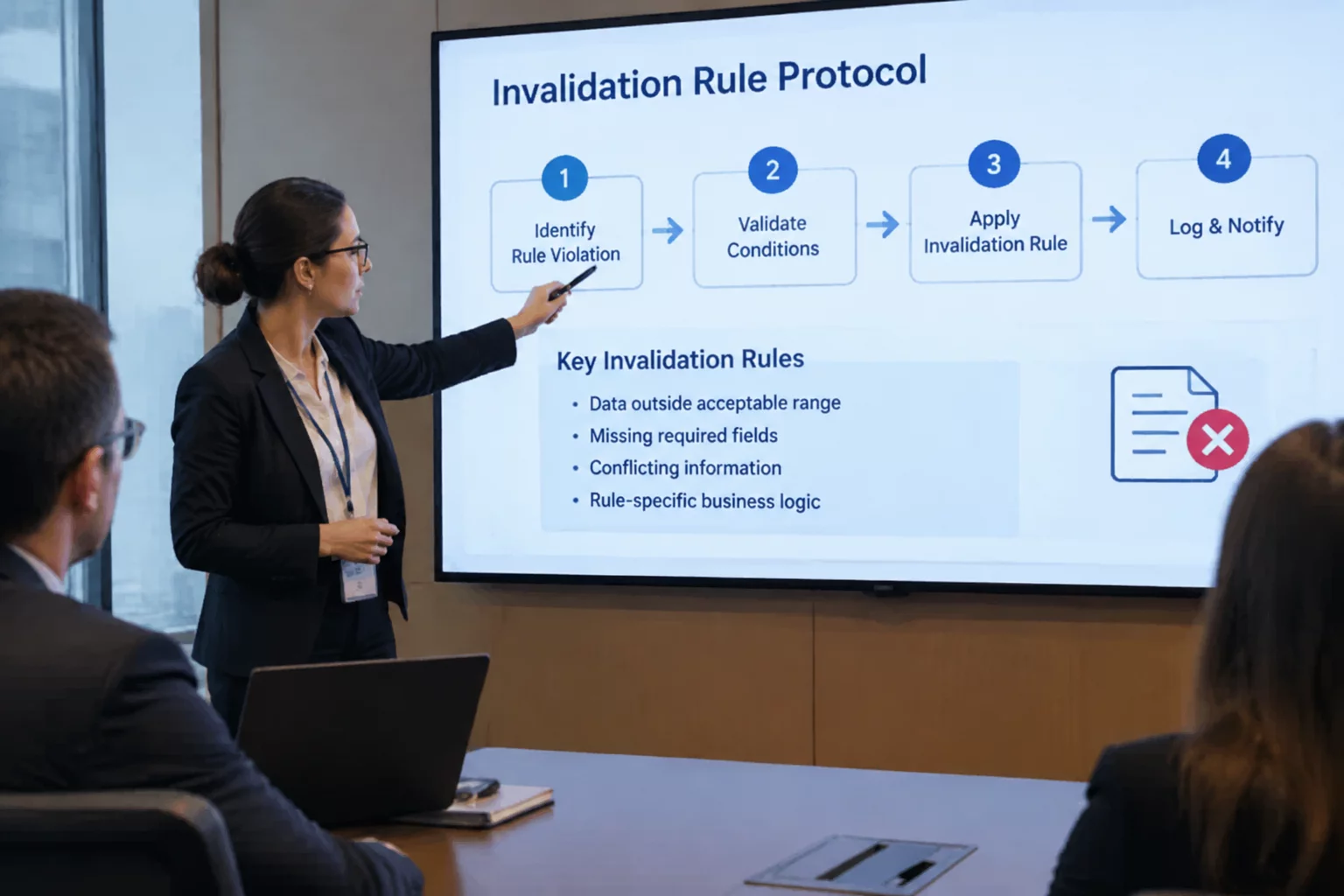
The Necessity of Unforgiving Invalidation Protocols
Watchlists degrade rapidly when analysts evaluate reasons to enter without articulating reasons to leave. The initial excitement surrounding a nascent chart configuration leads many operators to hoard tickers across multiple market sessions. As price wanders aimlessly through non-committal consolidations, the absence of an invalidation rule invites cognitive distortion, tempting observers to redefine support zones repeatedly.
Systematic researchers solve this degradation by enforcing negative prerequisites. Before any ticker joins an observation register, the researcher records the precise technical event that would render the setup null and void. When that boundary gets crossed, the symbol exits the ledger without debate, preserving attention for active opportunities.
Categorizing Invalidation Boundaries
Invalidation manifests across three distinct dimensions: price levels, time intervals, and volume parameters. Price invalidation represents the most direct mechanism, typically tied to swing lows, anchored VWAPs, or moving average clusters.
The Temporal Decay Factor
A setup that fails to trigger within an expected duration carries declining statistical expectancy. If a compression pattern takes fifteen days to resolve rather than the modeled five, the breakout edge evaporates. Assigning hard calendar stop dates eliminates sluggish assets.
Volume-based invalidation focuses on distribution behavior during observation. If an asset suffers anomalous institutional selling bars while allegedly preparing for an upside continuation, the fundamental rationale dissolves regardless of price proximity to support.
Implementation Workflow in the Ledger
Executing invalidation rules requires a standardized notation standard across your daily routine. Follow this sequence during every nightly review cycle:
- [01] Audit all active tickers against their documented price floors at 16:05 ET following official market close.
- [02] Verify whether the session close breached the defined invalidation limit by even one cent, marking qualifying tickers for purge.
- [03] Transfer purged assets to the historical audit archive ledger alongside the recorded disqualification reason.
Through this disciplined cadence, the active tracking layout remains lean, consisting exclusively of verified setups possessing intact technical rationales.