
The Illusion of Context in Narrative Watchlist Notes
Market participants frequently rely on open text fields inside charting terminals to capture qualitative rationale. Sentences like "looks coiled for continuation above prior consolidation high if volume expands" feel intuitive during weekend planning. However, when the market opens and volatile impulses develop, subjective phrasing invites selective memory. The brain unconsciously re-reads ambiguous words to justify staying attached to an asset whose structural thesis has dissolved.
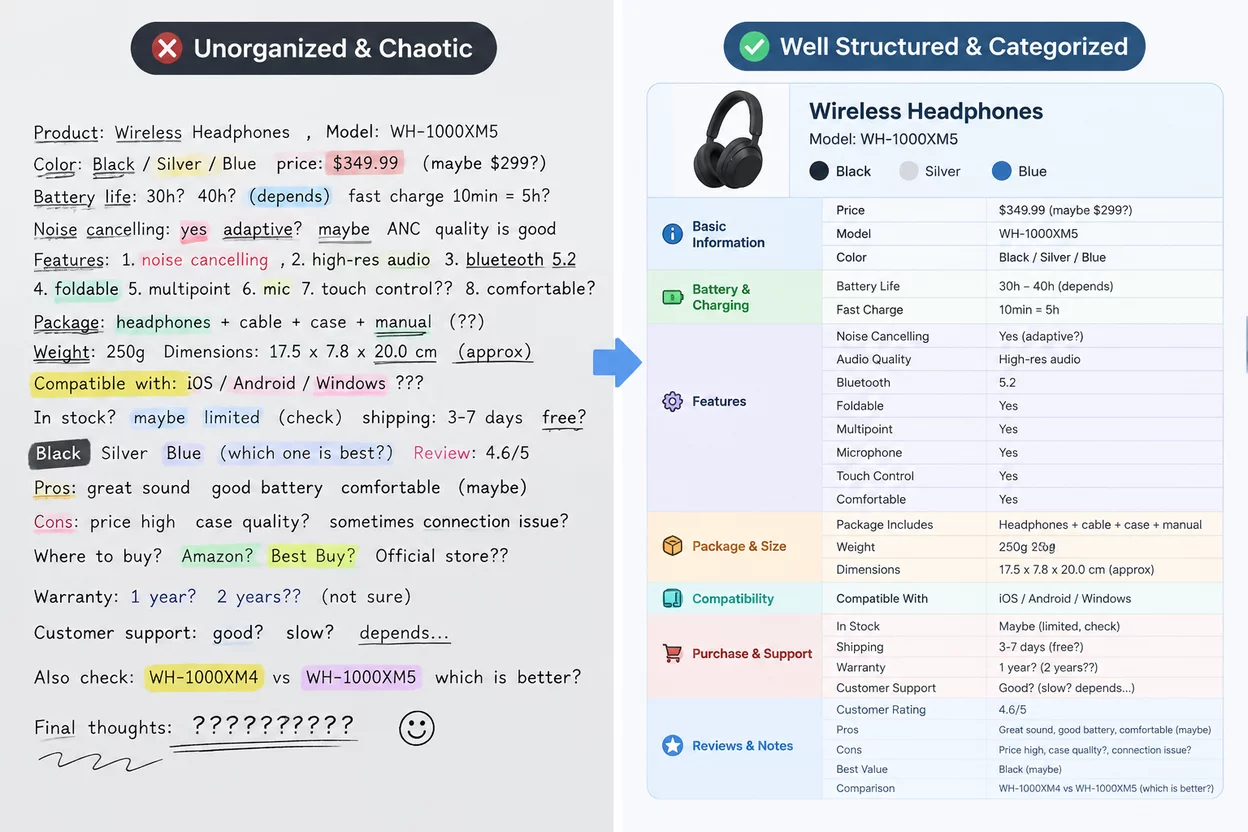
Freeform prose fails an essential audit test: it cannot be filtered, programmatically tested, or systematically audited for accuracy over multi-week review cadences. Without distinct boundary tags, an analyst cannot run an inventory query to isolate every symbol waiting for earnings drift versus those tracking consolidation retightening. The watchlist degrades into an uncurated dumping ground of historical sentiment rather than an actionable queue of strict setups.
Deconstructing the Five Essential Note Dimensions
A resilient ledger replaces prose boxes with standardized fields that capture discrete mechanics. Every monitored ticker requires an explicit Entry Trigger Condition, an Invalidation Boundary, a Review Deadline, a Primary Catalyst Tag, and a Disqualification Reason. This structure isolates the core premise so that subsequent audits compare live market facts directly against preset numeric criteria.
The Danger of Post-Hoc Reinterpretation
When price violates a level, human nature searches narrative text for alternative justifications. A structured row prevents moving the goalposts because the condition field accepts only true or false status flags. When the condition fails on the scheduled review date, protocol demands archiving the symbol immediately.
By segregating numeric constraints from conversational hypotheses, ledger managers maintain clean situational awareness. Filtering a watchlist for symbols with review dates expiring within forty-eight hours becomes an instant one-click routine, while freeform note-taking requires tedious manual scrolling and subjective re-evaluation of every single ticker on the monitor.
Migrating from Journal Scraps to an Auditable Matrix
Transitioning from chaotic notebooks to a disciplined ledger does not require complex infrastructure. It demands consistent schema discipline across screening sessions. Establishing three non-negotiable operational checkpoints guarantees that every symbol earns its place on active screens:
- [01] Establish immutable custom fields in TC2000 or spreadsheet tables for trigger price, hard invalidation point, and expiration date.
- [02] Ban general narrative phrases; force the assignment of categorical reason codes such as Range Contraction, Earnings Momentum, or Support Retest.
- [03] Perform bi-weekly ledger reconciliations where any ticker missing active condition validity is archived without hesitation.
Disciplined records create institutional memory. Over quarterly cycles, the structured ledger highlights which setup archetypes reliably triggered and which setup categories generated dormant watchlist clutter, transforming subjective routines into verified edge.